Narrated in English, with English subtitles. The pictures are illustrations; Scripture is quoted from the ASV. See the full article below.
- 1Born blind, that the works of God be made manifestThe disciples asked whose fault it was; Jesus spoke of the works of God.John 9:1John 9:2John 9:3
- 2Work while it is day; the night comethJesus’ work was preaching, and the seed is the word of God.John 9:4John 9:5Mark 1:38Luke 8:11
- 3The ground, the spittle and the clayCompared with Scripture: people are clay, and God’s word is like rain, like water.John 9:6Isaiah 64:81 Corinthians 3:9Deuteronomy 32:2
- 4The pool of Siloam: “Sent”He washed as Jesus said, and came back seeing.John 9:7John 5:19Genesis 49:10
- 5Prophecy said it long beforeThe eyes of the blind shall be opened: Scripture said so long before.Isaiah 35:5Isaiah 42:6–7
- 6Judgment: they that see may become blindThose who admit they cannot see are opened; those who think they can see end up unable to see.John 9:39John 5:22
Born blind, that the works of God should be made manifest
In the previous article, “When the Bible speaks of blindness, does it mean the eyes?”, we saw that blindness in the Bible means failing to understand God’s word. So how are the eyes opened? John 9 records the whole process, and it begins with one man:
And as he passed by, he saw a man blind from his birth.
John 9:1 · ASV
The disciples asked a very natural question:
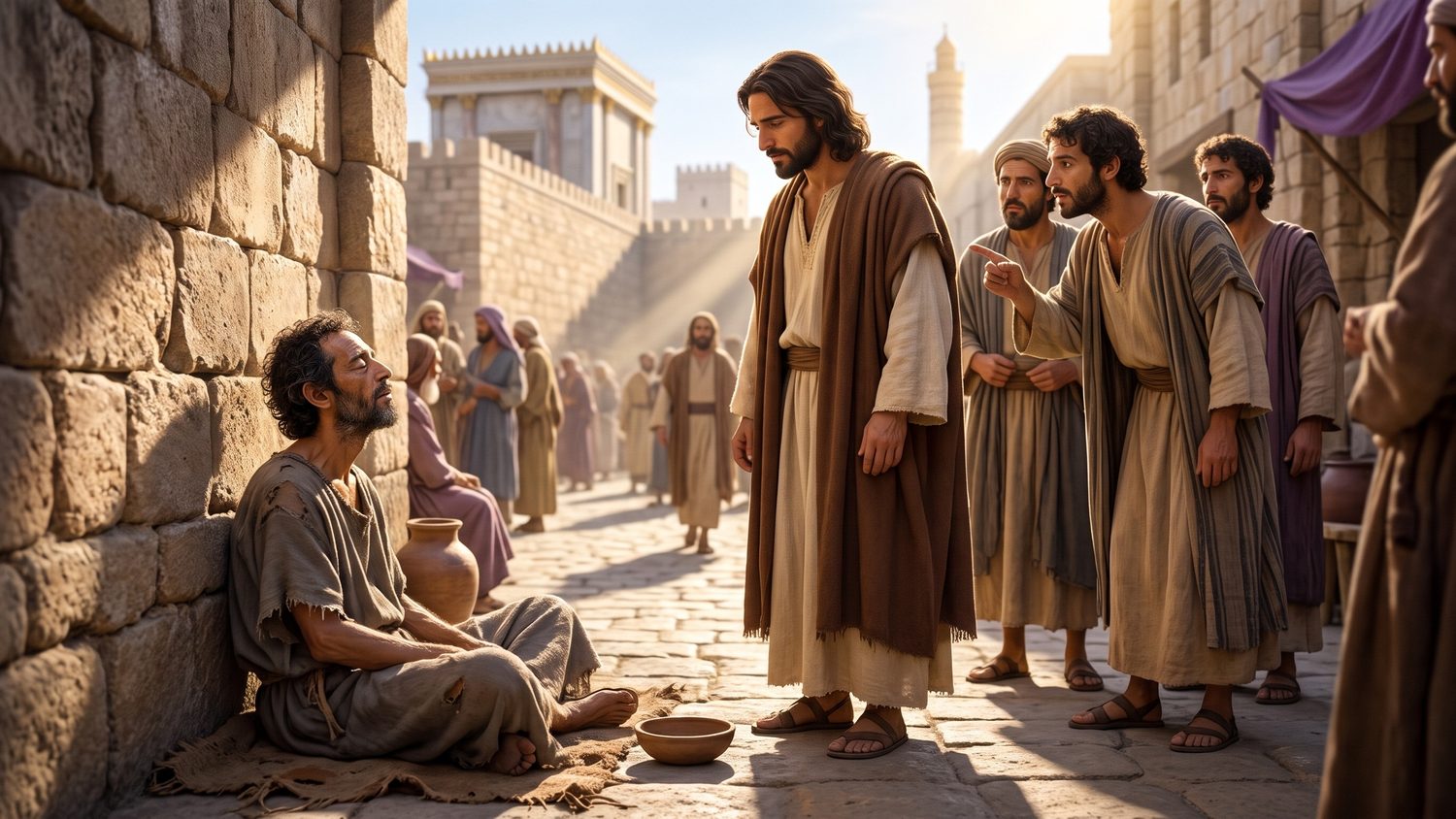
And his disciples asked him, saying, Rabbi, who sinned, this man, or his parents, that he should be born blind?
John 9:2 · ASV
Jesus’ answer changed the direction of the question:
Jesus answered, Neither did this man sin, nor his parents: but that the works of God should be made manifest in him.
John 9:3 · ASV
The disciples asked “whose fault?”; Jesus spoke of “the works of God”. This man’s eyes being opened is not just a story of healing; the whole event is meant to let people see how God works. From here, we follow the passage step by step.
Work while it is day; the night cometh
Jesus then said something very striking:
We must work the works of him that sent me, while it is day: the night cometh, when no man can work. When I am in the world, I am the light of the world.
John 9:4–5 · ASV
What are “the works of him that sent me”? Jesus said elsewhere:
And he saith unto them, Let us go elsewhere into the next towns, that I may preach there also; for to this end came I forth.
Mark 1:38 · ASV
Jesus’ work was preaching. Luke says “the seed is the word of God” (Luke 8:11, excerpt). Preaching is like sowing seed.
Jesus also painted this picture: “The kingdom of heaven is likened unto a man that sowed good seed in his field: but while men slept, his enemy came and sowed tares also among the wheat, and went away” (Matthew 13:24–25, excerpt).
Jesus said, “When I am in the world, I am the light of the world” (John 9:5). We can understand it like this: when there is light and the word, it is day; when there is no light and no word, it is like night. This is a time Jesus wants people to treasure.
The ground, the spittle and the clay
Then Jesus did something very unusual:
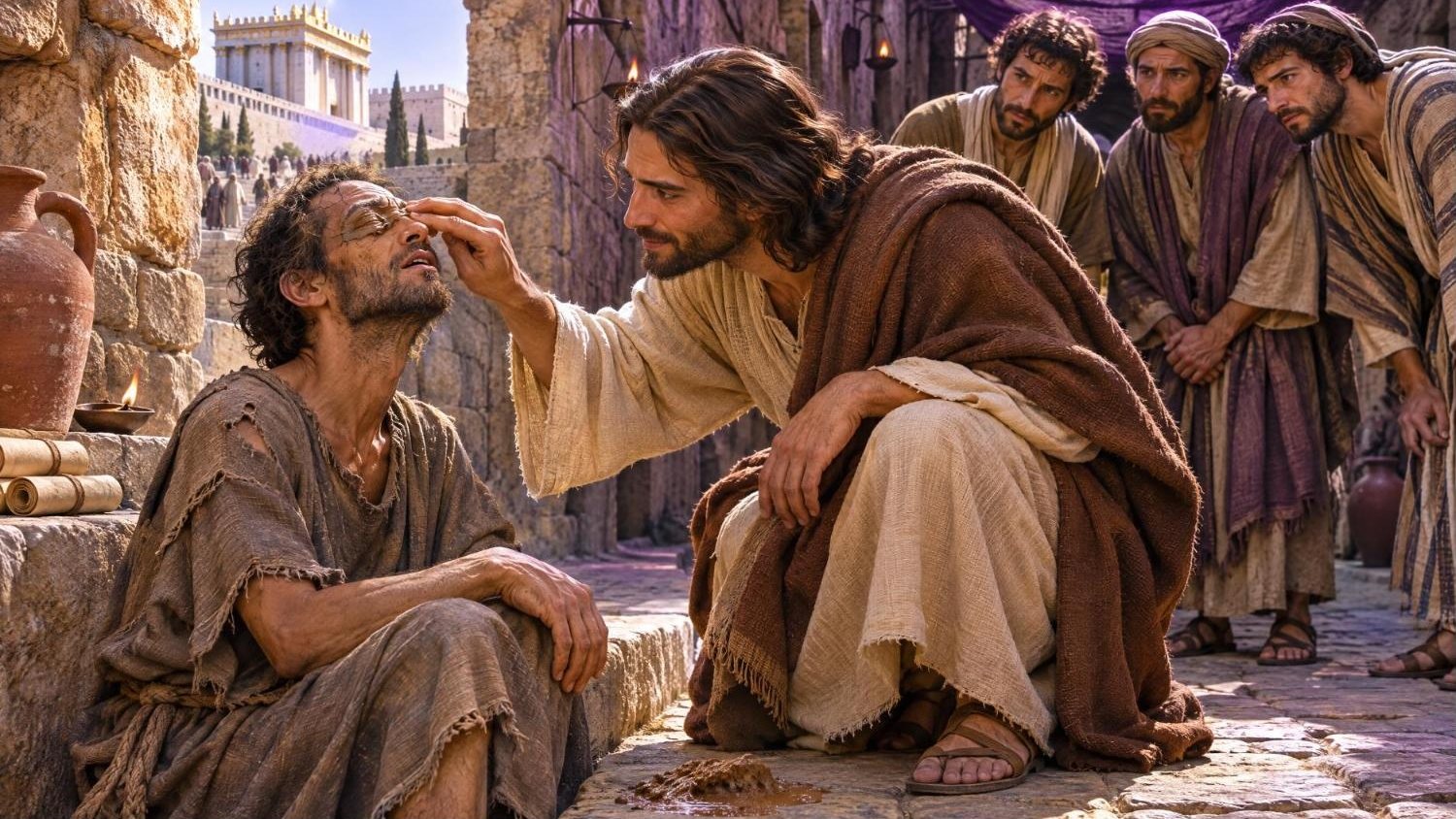
When he had thus spoken, he spat on the ground, and made clay of the spittle, and anointed his eyes with the clay…
John 9:6 · ASV
Why clay? There are several passages in the Bible to compare. Isaiah says:
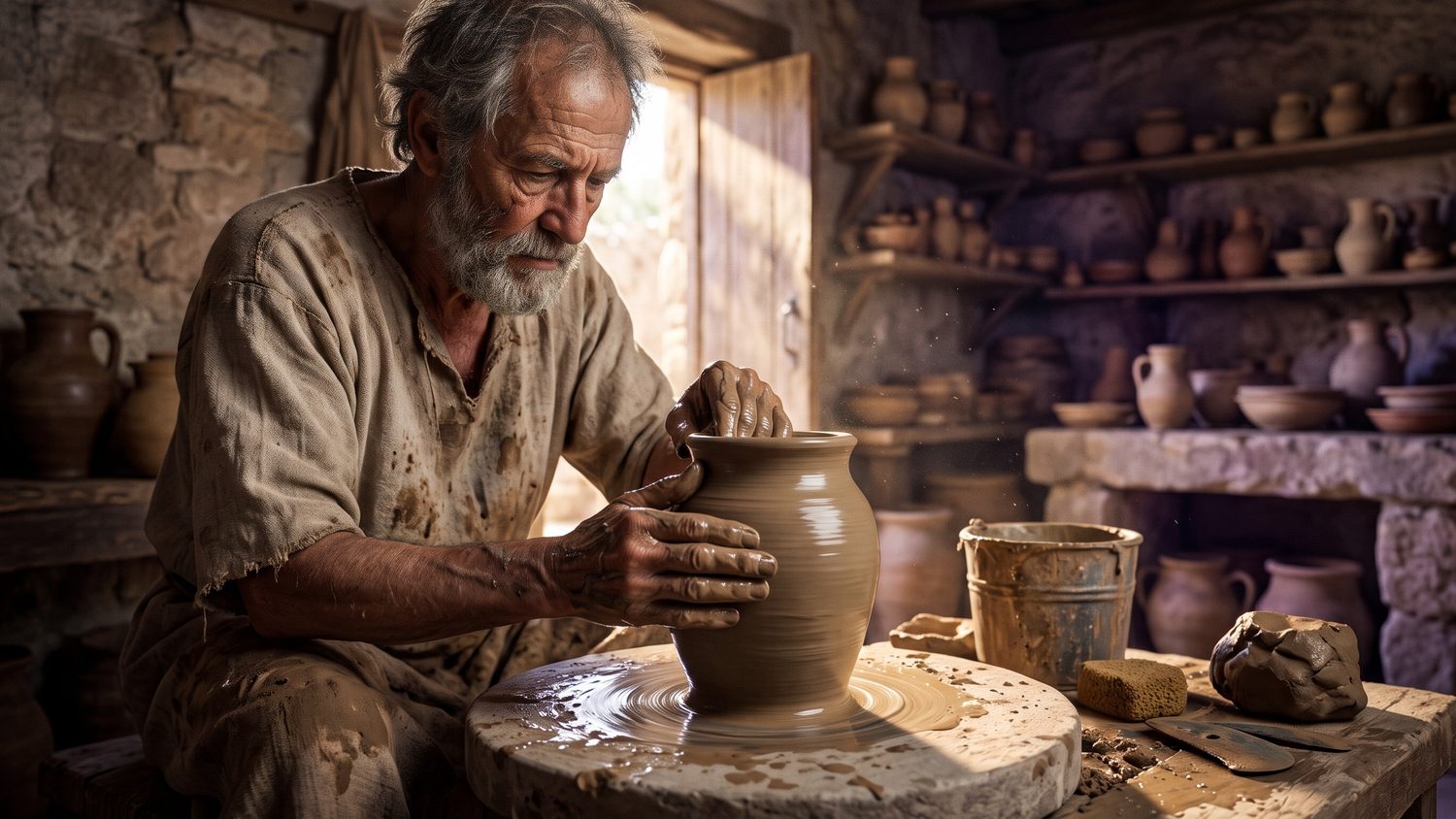
But now, O Jehovah, thou art our Father; we are the clay, and thou our potter; and we all are the work of thy hand.
Isaiah 64:8 · ASV
People are the clay; God is the potter. 1 Corinthians also says: “ye are God’s husbandry” (3:9, excerpt), that is, God’s farm field. In the Bible, the ground is often linked with people.
And the water? Moses said:
My doctrine shall drop as the rain; My speech shall distil as the dew, As the small rain upon the tender grass, And as the showers upon the herb.
Deuteronomy 32:2 · ASV
God’s teaching and words are like rain, like dew. Jesus also said:
But whosoever drinketh of the water that I shall give him shall never thirst; but the water that I shall give him shall become in him a well of water springing up unto eternal life.
John 4:14 · ASV
Putting these together, we can understand it like this: the ground is like the human heart; the water is like God’s word; the ground mixed with water from the mouth becomes clay, and putting it on the eyes is like putting God’s word into the heart, so that a person can see. This comes from comparing several passages; the text does not explain it this way directly, so as you read, compare them for yourself.
The pool of Siloam: “Sent”
Jesus said to him:
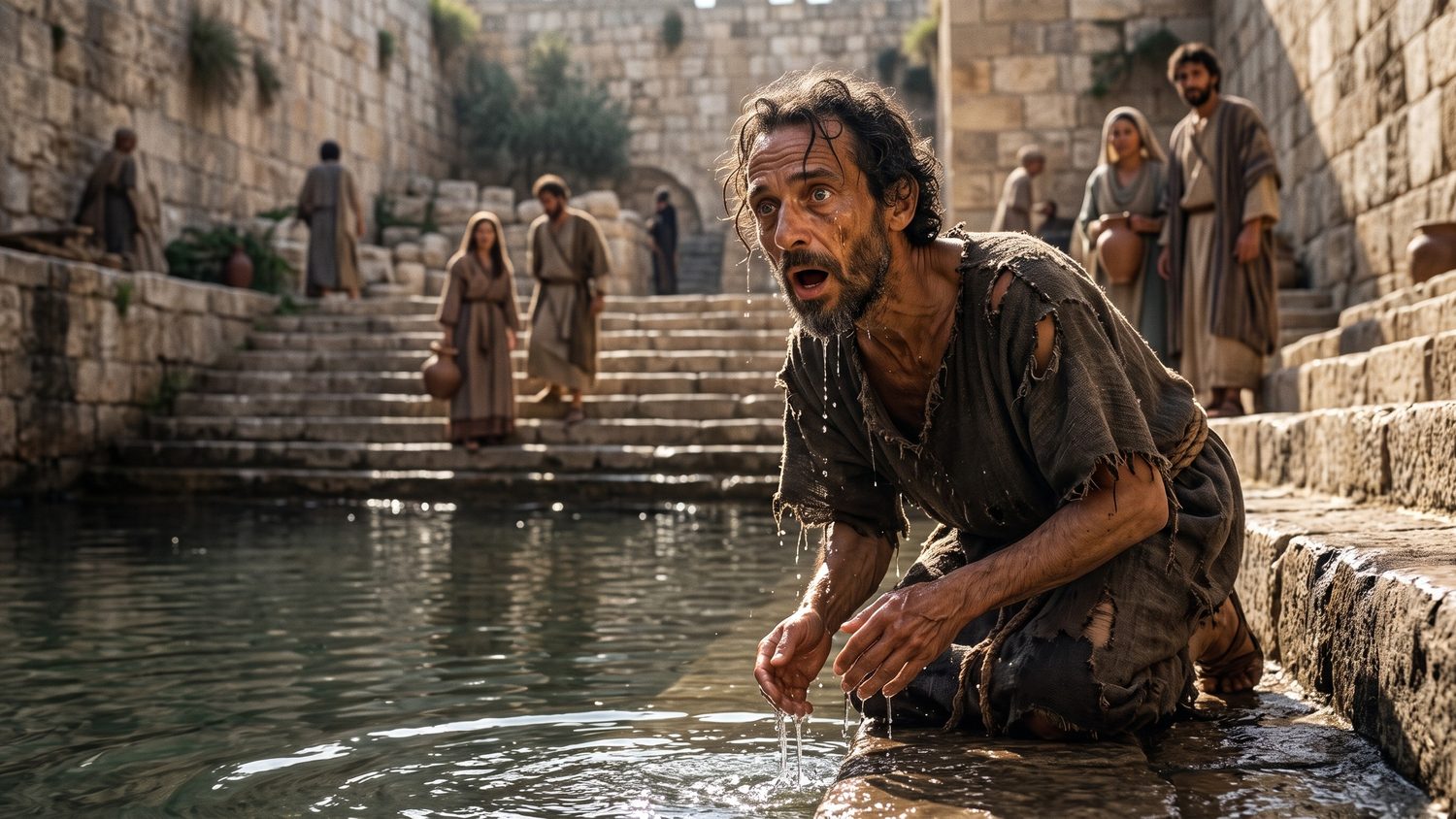
And said unto him, Go, wash in the pool of Siloam (which is by interpretation, Sent). He went away therefore, and washed, and came seeing.
John 9:7 · ASV
John makes a point of noting that Siloam means “Sent”. When Jesus spoke about himself, he often said he had been sent, and that everything he did followed what the Father showed him:
Jesus therefore answered and said unto them, Verily, verily, I say unto you, The Son can do nothing of himself, but what he seeth the Father doing: for what things soever he doeth, these the Son also doeth in like manner.
John 5:19 · ASV
Genesis also has a name:
The sceptre shall not depart from Judah, Nor the ruler’s staff from between his feet, Until Shiloh come; And unto him shall the obedience of the peoples be.
Genesis 49:10 · ASV
We can read Genesis’s “Shiloh” (often understood as the one who brings peace) together with John’s “Siloam” (Sent): both names point to Jesus, the one who was sent and who brings peace.
The blind man did what Jesus said: he went and washed, and came back seeing.
- Step 1He spat on the groundJohn 9:6
- Step 2Made clay and anointed his eyesJohn 9:6
- Step 3Go, wash in the pool of SiloamSiloam means “Sent”
John 9:7 - ResultHe came seeingJohn 9:7
Prophecy said it long before: the eyes of the blind shall be opened
Opening the eyes of the blind did not come out of nowhere. Isaiah said long before:
Then the eyes of the blind shall be opened, and the ears of the deaf shall be unstopped.
Isaiah 35:5 · ASV
And it says that God would give a servant “for a light of the Gentiles; to open the blind eyes, to bring out the prisoners from the dungeon, and them that sit in darkness out of the prison-house” (Isaiah 42:6–7, excerpt).
Jesus said, “I am the light of the world”, and he opened the eyes of the blind. What he did agrees with what Scripture said long before.
Judgment: those who see not may see, and those who see may become blind
Later in John 9, Jesus says:
And Jesus said, For judgment came I into this world, that they that see not may see; and that they that see may become blind.
John 9:39 · ASV
The word “judgment” sounds heavy. Jesus said, “For neither doth the Father judge any man, but he hath given all judgment unto the Son” (John 5:22). The judgment has two outcomes: those who cannot see may see, and those who see may become blind.
This is not about the eyes. It is saying: those who admit they cannot see have their eyes opened; those who think they can see end up unable to see. Who is on which side? Next we look at the second half of John 9, the man who was cast out and the people who questioned him: ““That they that see may become blind”: what did Jesus mean?”
Something to think about
- When I read the Bible, is my heart like a field ready to be worked, or already full of my own ideas?
- If Jesus’ words told me to “go and wash”, would I be willing to do it?
- Am I someone who admits “I cannot see”, or someone who says “We see”?