Narrated in English, with English subtitles. The pictures are illustrations; Scripture is quoted from the ASV. See the full article below.
- 1The day his eyes were opened was the sabbathThe standard is not rules made by people, but God’s word and God’s works.John 9:14John 9:16Colossians 2:16Matthew 12:7Matthew 12:8
- 2Parents afraid of being put out of the synagogueFearing people more than God; loving the glory of men more than the glory of God.John 9:20–21John 9:22John 12:42–43
- 3One thing I knowWhereas I was blind, now I see.John 9:24–25John 9:28–29John 5:46–47
- 4If this man were not from God, he could do nothingHe answered with facts and reasons, and was cast out for it.John 9:30–33John 9:34
- 5Jesus goes looking for the man who was cast outHe lost the synagogue, but met Jesus.John 9:35–38
- 6They that see may become blindThe difference is whether we admit it; the Bible is a mirror for looking at ourselves.John 9:39John 9:40–41Revelation 3:17
The day his eyes were opened was the sabbath
In the previous article, “Why did Jesus put clay on a blind man’s eyes?”, we saw the blind man’s eyes opened. What happened next is even more worth reading closely: the man was brought to the Pharisees.
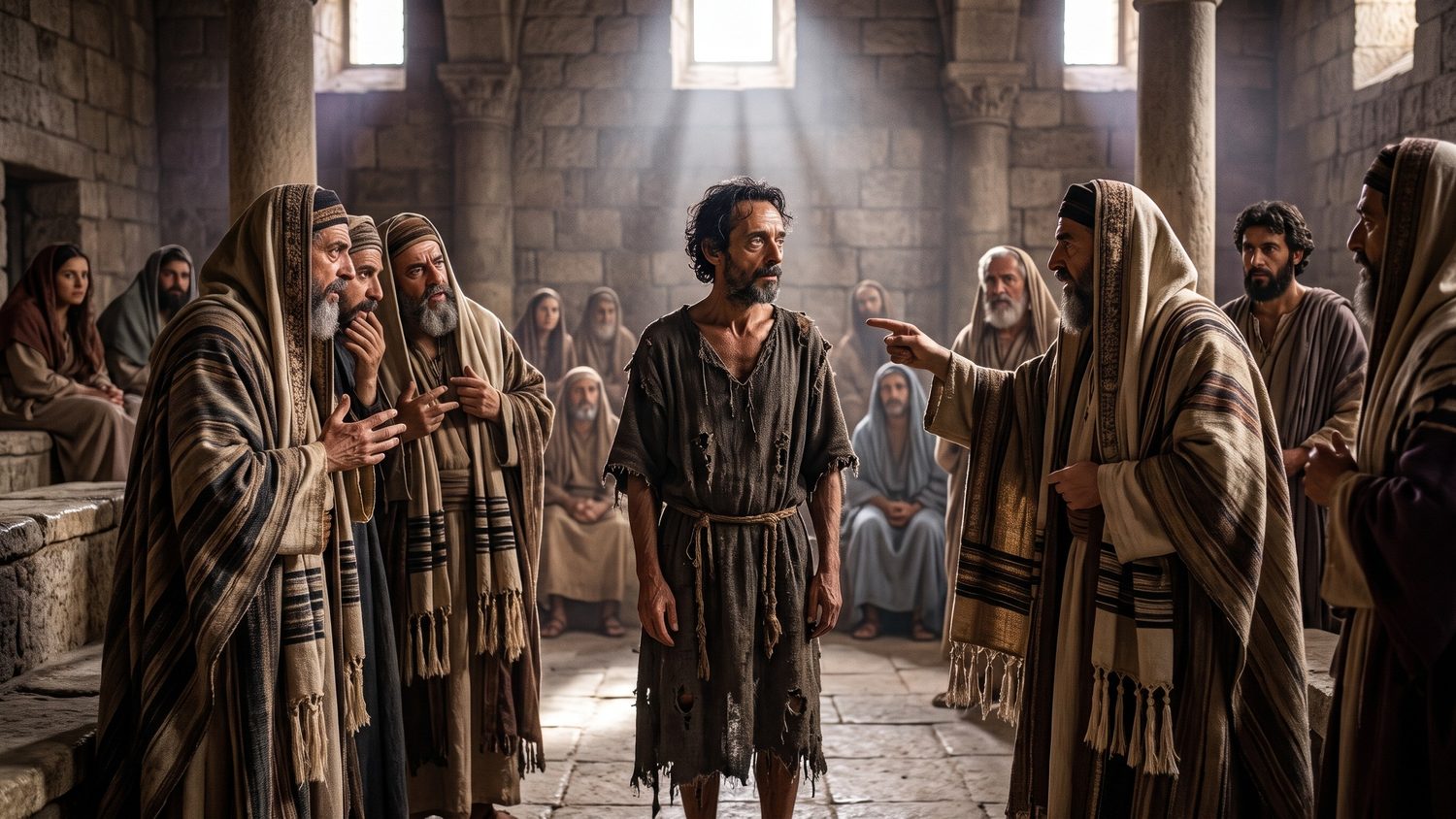
Now it was the sabbath on the day when Jesus made the clay, and opened his eyes.
John 9:14 · ASV
When the Pharisees heard what had happened, they began to argue among themselves:
Some therefore of the Pharisees said, This man is not from God, because he keepeth not the sabbath. But others said, How can a man that is a sinner do such signs? And there was a division among them.
John 9:16 · ASV
Some used “does he keep the sabbath?” to judge whether a man was from God. But Colossians says:
Let no man therefore judge you in meat, or in drink, or in respect of a feast day or a new moon or a sabbath day…
Colossians 2:16 · ASV
Jesus also told people: “I desire mercy, and not sacrifice” (Matthew 12:7, excerpt), and said:
For the Son of man is lord of the sabbath.
Matthew 12:8 · ASV
Whether someone is from God is not judged by rules made by people, but by God’s word and the works of God.
Parents afraid of being put out of the synagogue
The Pharisees did not believe he had been blind, so they called his parents and asked them. His parents said:
His parents answered and said, We know that this is our son, and that he was born blind: but how he now seeth, we know not; or who opened his eyes, we know not: ask him; he is of age; he shall speak for himself.
John 9:20–21 · ASV
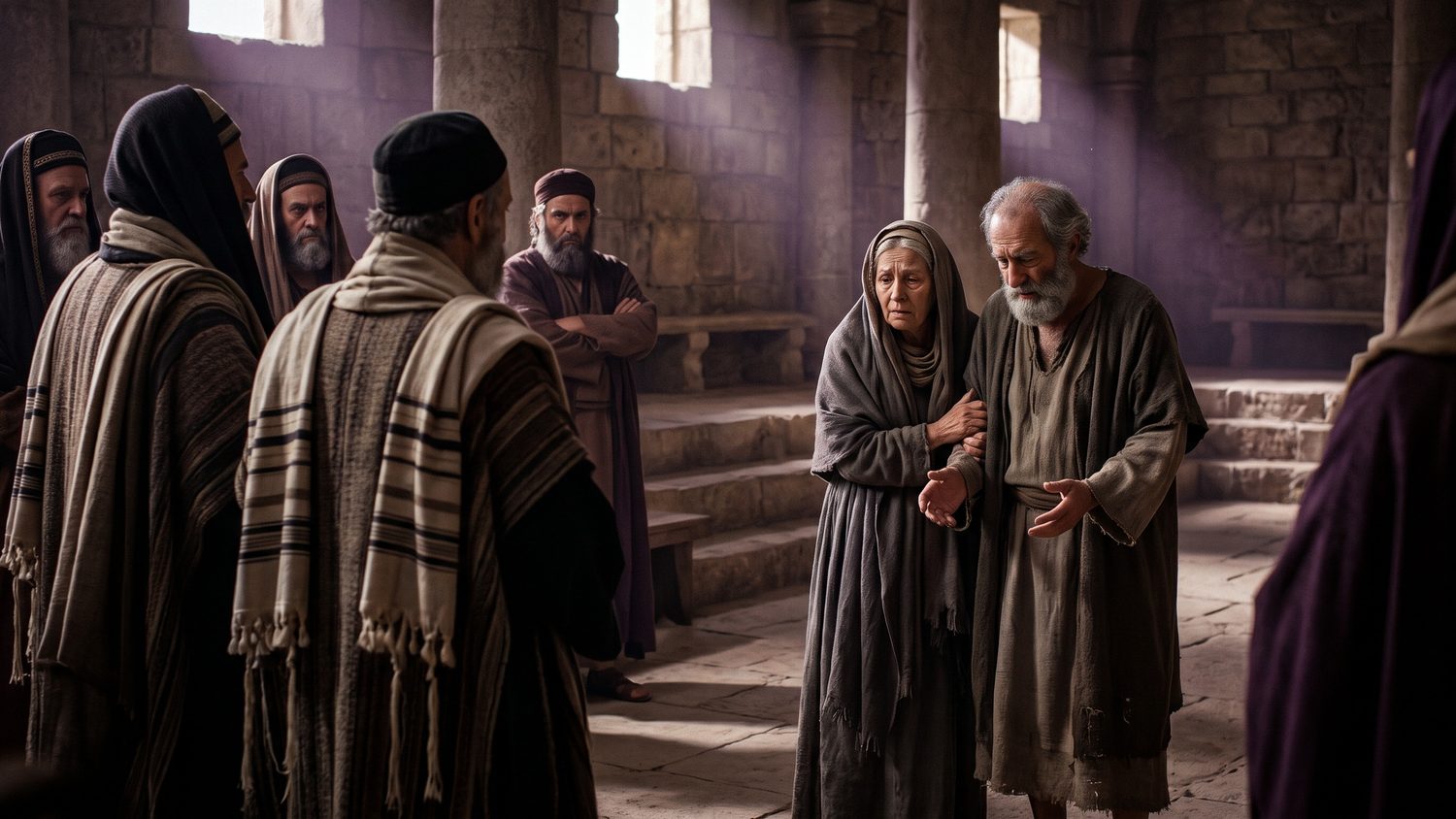
Then John explains why they answered this way:
These things said his parents, because they feared the Jews: for the Jews had agreed already, that if any man should confess him to be Christ, he should be put out of the synagogue.
John 9:22 · ASV
They were not the only ones. John 12 also says:
Nevertheless even of the rulers many believed on him; but because of the Pharisees they did not confess it, lest they should be put out of the synagogue: for they loved the glory that is of men more than the glory that is of God.
John 12:42–43 · ASV
Being put out of the synagogue was a very serious thing at the time. It is easy to fear people more than God, and to love the glory of men more than the glory of God. This is not a rebuke of these parents; it is a reminder to every one of us: I could do the same.
One thing I know
The Pharisees called the man a second time:
So they called a second time the man that was blind, and said unto him, Give glory to God: we know that this man is a sinner. He therefore answered, Whether he is a sinner, I know not: one thing I know, that, whereas I was blind, now I see.
John 9:24–25 · ASV
He did not know whether the man was a sinner; he only knew what had happened to him: he had been blind, and now he could see. Then they said:
And they reviled him, and said, Thou art his disciple; but we are disciples of Moses. We know that God hath spoken unto Moses: but as for this man, we know not whence he is.
John 9:28–29 · ASV
They said they were disciples of Moses. Jesus had said:
For if ye believed Moses, ye would believe me; for he wrote of me. But if ye believe not his writings, how shall ye believe my words?
John 5:46–47 · ASV
Reading the same writings of Moses, some saw that they pointed to Jesus, and some did not. This brings us back to the veil in “How do you read the Bible so it makes sense?”: the book is the same, but what people see is different. We also looked at Jesus and Moses in “Where is eternal life?”
If this man were not from God, he could do nothing
The man who used to beg then spoke very clearly and logically:
The man answered and said unto them, Why, herein is the marvel, that ye know not whence he is, and yet he opened mine eyes. We know that God heareth not sinners: but if any man be a worshipper of God, and do his will, him he heareth. Since the world began it was never heard that any one opened the eyes of a man born blind. If this man were not from God, he could do nothing.
John 9:30–33 · ASV
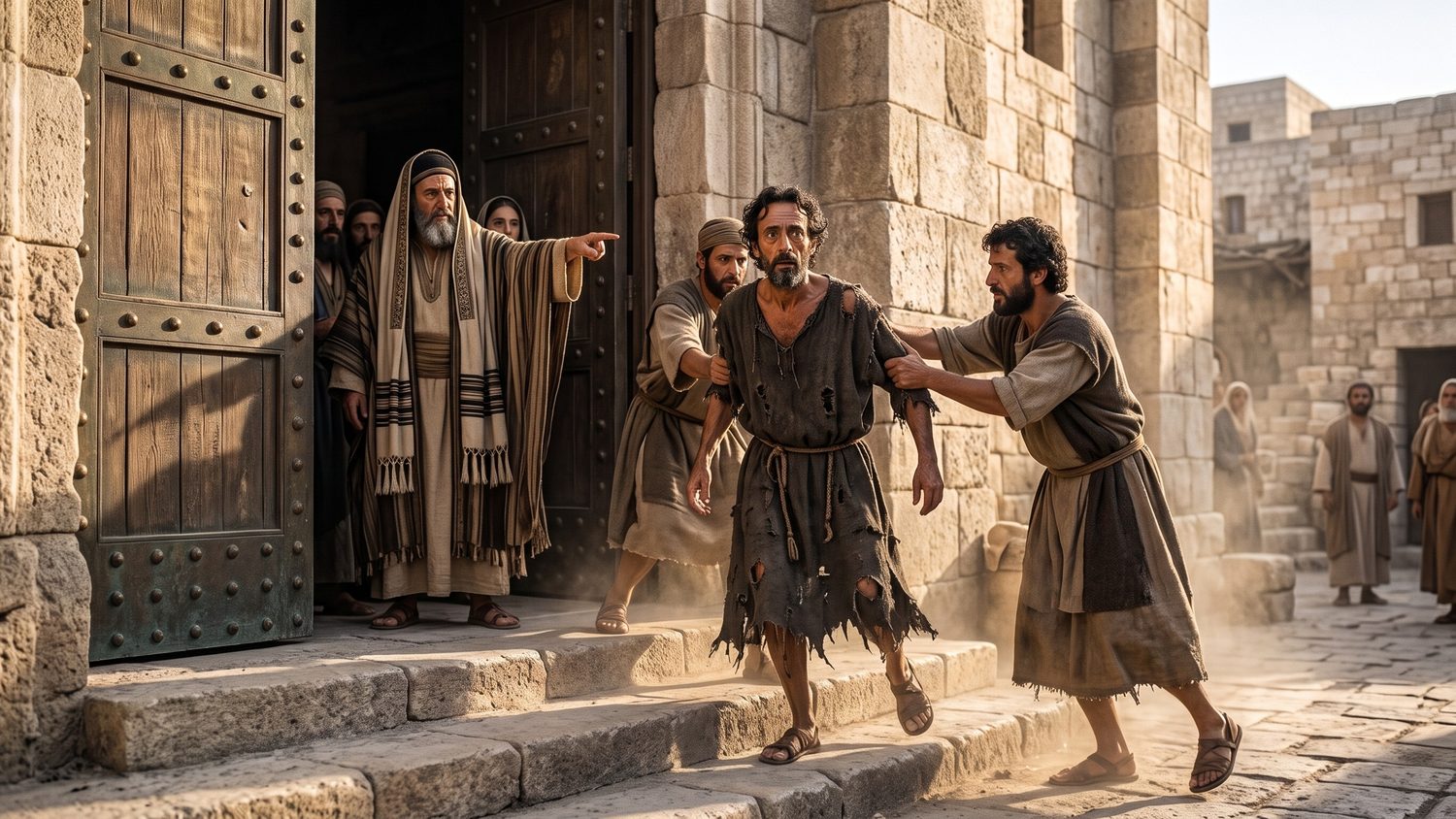
He used the facts in front of him and what he knew to be true: God heareth not sinners, but if any man be a worshipper of God and do his will, him he heareth; since the world began no one had opened the eyes of a man born blind; so the one who opened his eyes must be from God. The answer he got was:
They answered and said unto him, Thou wast altogether born in sins, and dost thou teach us? And they cast him out.
John 9:34 · ASV
They did not answer his reasoning; they went back to “who are you?”. Being cast out of the synagogue was exactly what his parents had feared.
Jesus goes looking for the man who was cast out
The story does not end there:
Jesus heard that they had cast him out; and finding him, he said, Dost thou believe on the Son of God? He answered and said, And who is he, Lord, that I may believe on him? Jesus said unto him, Thou hast both seen him, and he it is that speaketh with thee. And he said, Lord, I believe. And he worshipped him.
John 9:35–38 · ASV
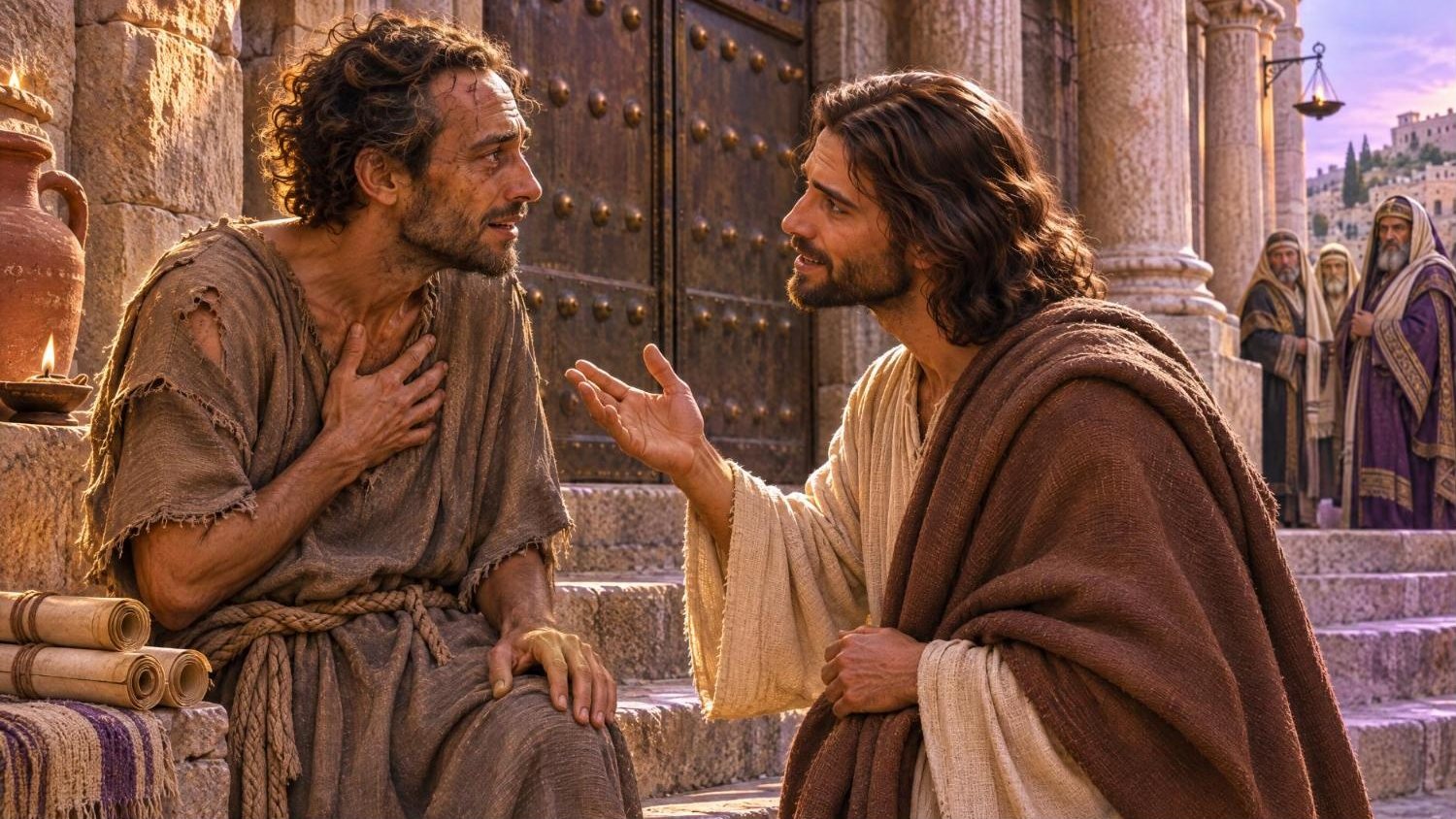
When he had been cast out, Jesus came to find him. At first this man did not even know where Jesus was; now his eyes were open, and he knew the one who had opened them. He lost the synagogue, but he met Jesus: “Lord, I believe.”
They that see may become blind
John 9 closes like this:
And Jesus said, For judgment came I into this world, that they that see not may see; and that they that see may become blind.
John 9:39 · ASV
Those of the Pharisees who were with him heard these things, and said unto him, Are we also blind? Jesus said unto them, If ye were blind, ye would have no sin: but now ye say, We see: your sin remaineth.
John 9:40–41 · ASV
The Pharisees asked: “Are we also blind?” Jesus’ answer is very direct. The difference is not between “seeing” and “not seeing”, but between admitting it and not: those who admit they cannot see can have their eyes opened; those who say “We see” leave nothing to be opened, and so their sin remains.
| Aspect | The man who had been blind | The Pharisees who questioned him |
|---|---|---|
| What the Bible says | One thing I know, that, whereas I was blind, now I seeJohn 9:25 | We know that this man is a sinnerJohn 9:24 |
| Afterwards | Cast out, and Jesus came to find himJohn 9:34–35 | Are we also blind?John 9:40 |
| The result | Lord, I believe. And he worshipped himJohn 9:38 | Your sin remainethJohn 9:41 |
These words are not for looking at other people. Revelation also says: “and knowest not that thou art the wretched one and miserable and poor and blind and naked” (3:17, excerpt). The Bible is like a mirror, to be held up to ourselves: am I also saying “We see”?
The next topic is “The seven frameworks of the Bible”, which uses seven frameworks to see the whole Bible as one.
Something to think about
- If someone told me I “cannot see”, what would my first reaction be?
- Do I often use the Bible to look at other people, but not at myself?
- Is there something I have experienced myself, where I can say “this is how I used to be, and now it is different”?