Narrated in English, with English subtitles. The pictures are illustrations; Scripture is quoted from the ASV. See the full article below.
- 1Someone asked: are they few that are saved?Jesus gave no number; he turned the question back to each listener.Luke 13:23–24
- 2What is the narrow door?The door is Jesus; entering means believing in him and following what he taught.Matthew 7:13–14John 10:7John 10:9
- 3The door opens, and it also shutsThe door is open now; there is still time to hear and respond.Luke 13:25–26Revelation 3:20
- 4Saying “Lord, Lord” is not enoughWhat Jesus looks for is whether we do the will of the Father.Matthew 7:21–22
- 5Saved, more than onceHe delivered, he delivers, and he will yet deliver.2 Corinthians 1:102 Samuel 22:1John 12:27
Someone asked Jesus: are they few that are saved?
Luke records a very direct question:
Lord, are they few that are saved?
Luke 13:23 (the questioner’s words) · ASV
Jesus did not give a number. Instead, he turned the question back to each person listening:
Strive to enter in by the narrow door: for many, I say unto you, shall seek to enter in, and shall not be able.
Luke 13:24 · ASV
Jesus talks about a “door”, and about “striving”. The point is not how many other people there are, but whether I myself have entered the door.
What is the narrow door?
In Matthew, Jesus said something similar:
Enter ye in by the narrow gate: for wide is the gate, and broad is the way, that leadeth to destruction, and many are they that enter in thereby. For narrow is the gate, and straitened the way, that leadeth unto life, and few are they that find it.
Matthew 7:13–14 · ASV
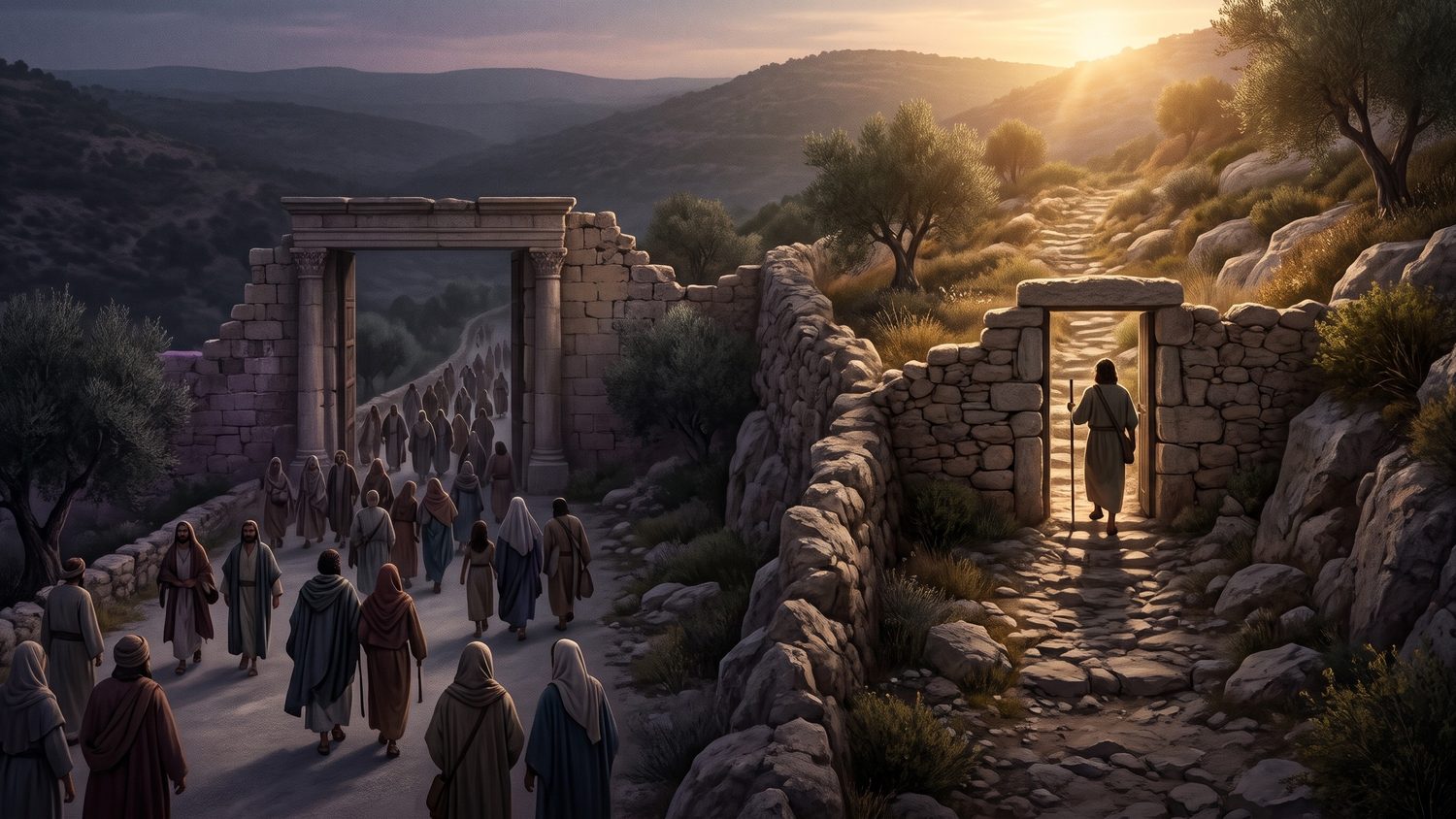
So where is this door? Jesus himself said: “I am the door of the sheep” (John 10:7), and then went on:
I am the door; by me if any man enter in, he shall be saved, and shall go in and go out, and shall find pasture.
John 10:9 · ASV
The door is Jesus. Entering it means believing in him and following what he taught. When Jesus says the way is “straitened”, we can understand it like this: it is a way we follow step by step; the broad way is going along with our own ideas and the direction most people are heading.
The door opens, and it also shuts
Jesus then painted a picture:
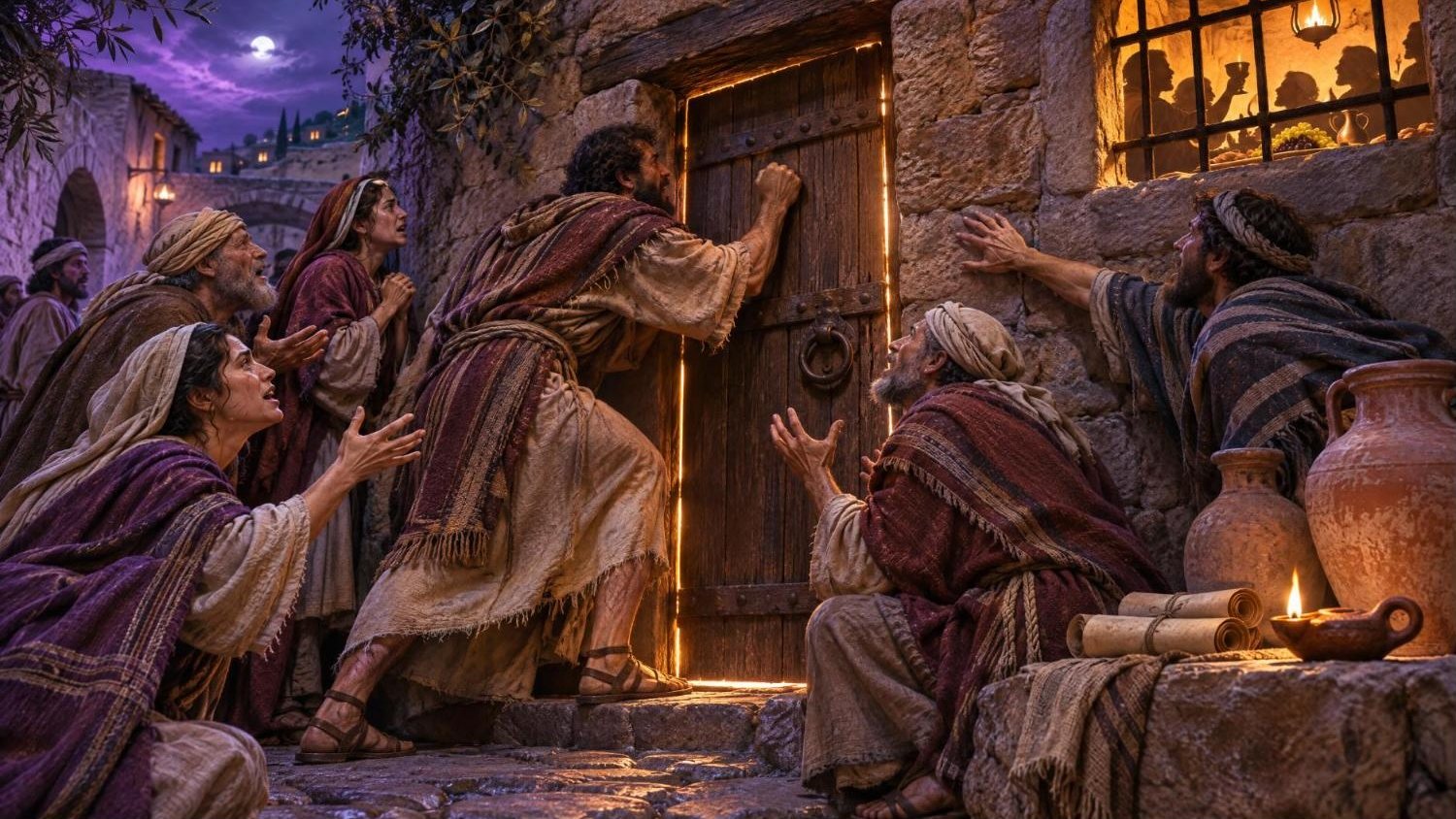
When once the master of the house is risen up, and hath shut to the door, and ye begin to stand without, and to knock at the door, saying, Lord, open to us; and he shall answer and say to you, I know you not whence ye are…
Luke 13:25 · ASV
The people standing outside the door are not strangers. They say: “We did eat and drink in thy presence, and thou didst teach in our streets” (13:26). They sat at the table with Jesus and heard his teaching. But once the door is shut, it is shut.
It is like a class with a time when the door opens and a time when it closes: you cannot wait until the very end to decide to go in. It is worth noticing that Revelation has a different picture, in which the one standing at the door and knocking is Jesus:
Behold, I stand at the door and knock: if any man hear my voice and open the door, I will come in to him, and will sup with him, and he with me.
Revelation 3:20 · ASV
In other words, the door is open now. There is still time to hear, and still time to respond.
Saying “Lord, Lord” is not enough
The people in Luke call Jesus “Lord”. Matthew has the same scene:
Not every one that saith unto me, Lord, Lord, shall enter into the kingdom of heaven; but he that doeth the will of my Father who is in heaven.
Matthew 7:21 · ASV
Then Jesus said that many would say to him in that day:
Many will say to me in that day, Lord, Lord, did we not prophesy by thy name, and by thy name cast out demons, and by thy name do many mighty works?
Matthew 7:22 · ASV
Prophesying, casting out demons, doing mighty works: from the outside, that already looks very devoted. But what Jesus looks for is whether we do the will of the Father. He said that everyone who hears his words and does them is like a wise man who built his house upon the rock (7:24, excerpt). Faith has to go all the way to “doing”. We look at this more closely in “If I believe in Jesus, do I still need to keep the commandments?”
Saved, more than once
By this point it is easy to assume that being saved means going to heaven after we die, something done once and for all. But when the Bible talks about being saved, it covers far more. Paul wrote:
Who delivered us out of so great a death, and will deliver: on whom we have set our hope that he will also still deliver us…
2 Corinthians 1:10 · ASV
- ThenHe delivered“who delivered us out of so great a death”
2 Corinthians 1:10 - NowHe delivers“and doth deliver” (KJV)
2 Corinthians 1:10 - AheadHe will yet deliver“he will also still deliver us”
2 Corinthians 1:10
These three points in time echo the two promises of 2 Timothy 4:18 in “If I believe in Jesus, am I saved?”: first to be delivered from every evil work, and also to be saved unto his heavenly kingdom.
The Old Testament is the same. David was hunted by enemies all his life. Later he sang a song, and it begins with these words:
David spake unto Jehovah the words of this song in the day that Jehovah delivered him out of the hand of all his enemies, and out of the hand of Saul.
2 Samuel 22:1 (excerpt) · ASV
In the song he describes being rescued like this: “He sent from on high, he took me; He drew me out of many waters” (22:17). Even Jesus prayed to the Father like this: “Father, save me from this hour. But for this cause came I unto this hour” (John 12:27, excerpt).
So saving is something God does continually, not something that happens only at the very last moment. When someone asks “are they few that are saved?”, the question more worth asking than any number is: where am I on the road right now?
Something to think about
- In my mind, is being saved a single moment, or a road that goes on?
- If Jesus is the door, am I outside it, at the doorway, or already on the way?
- I have said “Lord, Lord”. When was the last time I actually did what he said, and in what?