Narrated in English, with English subtitles. The pictures are illustrations; Scripture is quoted from the ASV. See the full article below.
- 1Does faith need works?Faith, if it have not works, is dead.James 2:17James 2:22
- 2The people in the wilderness: they believed, but did not finish the journeyThey heard, but did not do it.Jude 1:51 Corinthians 10:5Hebrews 3:18–19
- 3The covenant: the commandment is not too hardGod gives a way that can be walked, not a puzzle to trap people.Exodus 24:7Deuteronomy 30:11
- 4The first covenant was broken, so there is a new covenantThe new covenant does not take the commandments away; it puts God’s word into our hearts.Jeremiah 31:31–32Matthew 5:17Hebrews 8:10
Does faith need works?
We have seen that faith is the starting point, with a road still ahead. So after believing, is there anything we need to do? James puts it very directly:
Even so faith, if it have not works, is dead in itself.
James 2:17 · ASV
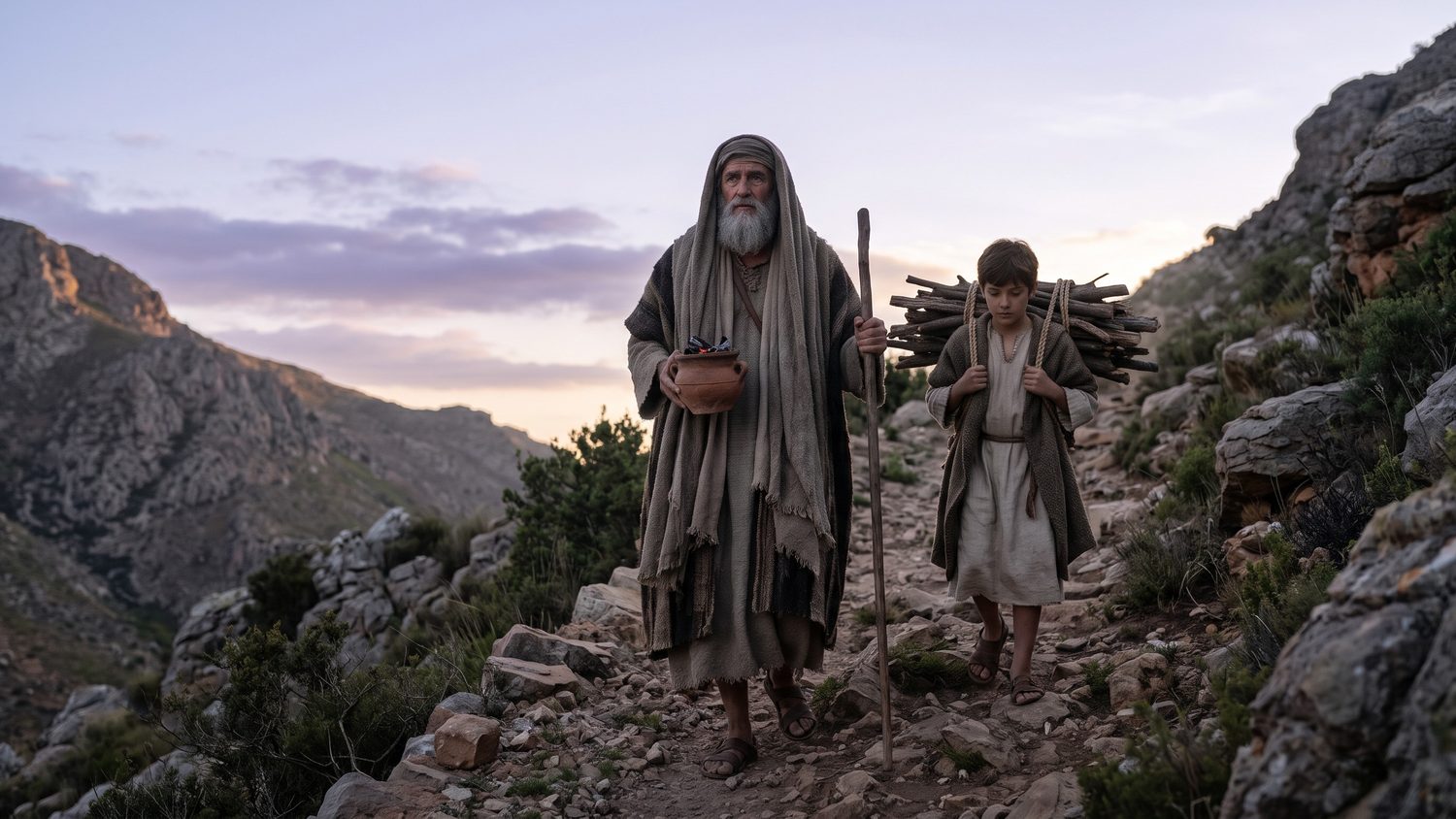
Then he takes Abraham as an example:
Thou seest that faith wrought with his works, and by works was faith made perfect…
James 2:22 · ASV
The “works” here are not standards people set for themselves, but doing what God has commanded: what Jesus in Matthew 7:21 calls doing “the will of my Father”. We began this subject in “Are only a few saved?”, and this article looks at it more fully.
The people in the wilderness: they believed, but did not finish the journey
One group of people in the Bible shows this better than anyone. Jude writes:
Now I desire to put you in remembrance, though ye know all things once for all, that the Lord, having saved a people out of the land of Egypt, afterward destroyed them that believed not.
Jude 1:5 · ASV
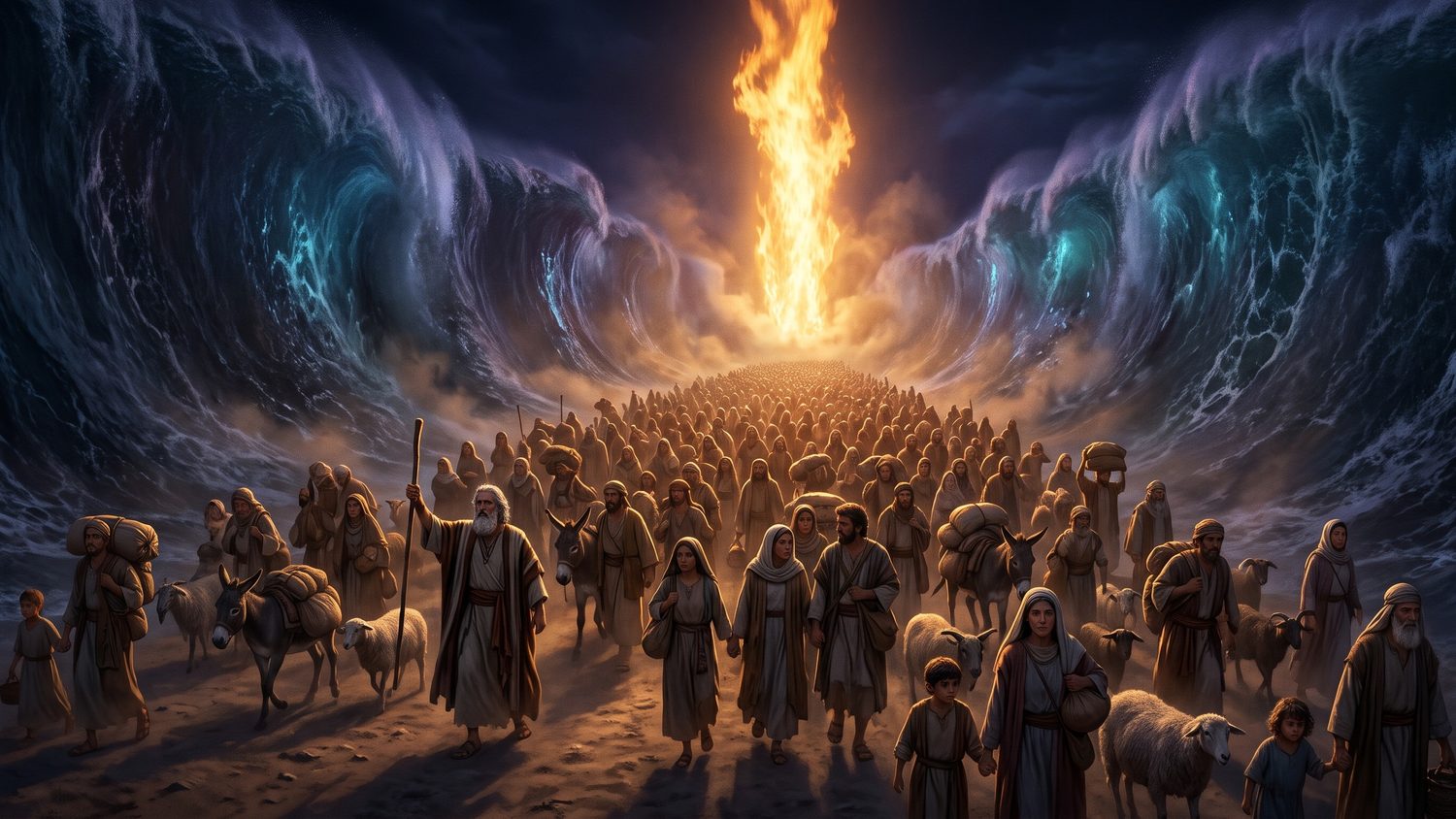
They were not people who did not know God. 1 Corinthians says they were all under the cloud, all passed through the sea, all ate the same spiritual food and drank the same spiritual drink. And yet:
Howbeit with most of them God was not well pleased: for they were overthrown in the wilderness.
1 Corinthians 10:5 · ASV
Why? Hebrews makes it very clear:
And to whom sware he that they should not enter into his rest, but to them that were disobedient? And we see that they were not able to enter in because of unbelief.
Hebrews 3:18–19 · ASV
Being “disobedient” and “unbelief” here describe the same thing: they heard, but did not do it. These were the people who came out of Egypt with Moses and saw God’s saving work with their own eyes. The problem was that after believing, they did not obey God’s word.
- Setting outSaved out of EgyptThe Lord saved a people
Jude 1:5 - ExperienceThrough the sea, spiritual foodThey all saw God at work
1 Corinthians 10:1–4 - CovenantThey promised to obey“All that Jehovah hath spoken will we do, and be obedient”
Exodus 24:7 - ResultDisobedient, overthrown in the wildernessHebrews 3:18–19
1 Corinthians 10:5
This history is not just a story from the past. It is also written as a reminder to us:
Let us fear therefore, lest haply … any one of you should seem to have come short of it.
Hebrews 4:1 (excerpt) · ASV
God makes a covenant with the people: the commandment is not too hard
Exodus records that at Mount Sinai God said to the people:
Now therefore, if ye will obey my voice indeed, and keep my covenant, then ye shall be mine own possession from among all peoples: for all the earth is mine: and ye shall be unto me a kingdom of priests, and a holy nation.
Exodus 19:5–6 (excerpt) · ASV
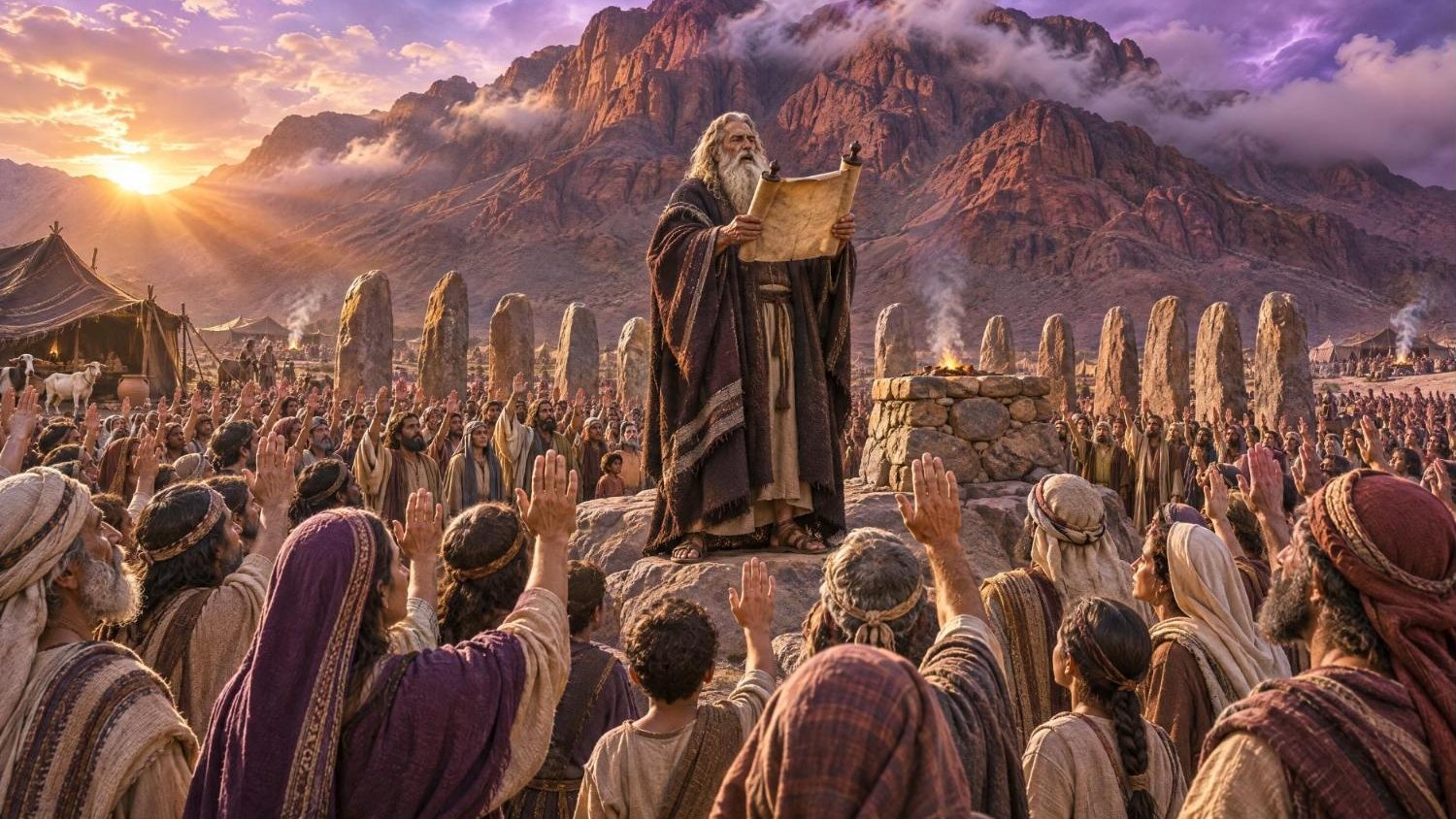
Moses read the book of the covenant to the people, and they answered: “All that Jehovah hath spoken will we do, and be obedient” (24:7). Then Moses sprinkled the blood on the people and said: “Behold the blood of the covenant” (24:8, excerpt).
Some people feel God’s commandments are too heavy to keep. But Deuteronomy says:
For this commandment which I command thee this day, it is not too hard for thee, neither is it far off.
Deuteronomy 30:11 · ASV
Deuteronomy 28 also sets out clearly before the people the blessings that come from hearkening and keeping, and the consequences of not hearkening. What God gives is a way that can be walked, not a puzzle to trap people.
The first covenant was broken, so there is a new covenant
But the people did not keep this covenant. Jeremiah foretold a new one:
Behold, the days come, saith Jehovah, that I will make a new covenant with the house of Israel, and with the house of Judah: not according to the covenant that I made with their fathers in the day that I took them by the hand to bring them out of the land of Egypt; which my covenant they brake, although I was a husband unto them.
Jeremiah 31:31–32 (excerpt) · ASV
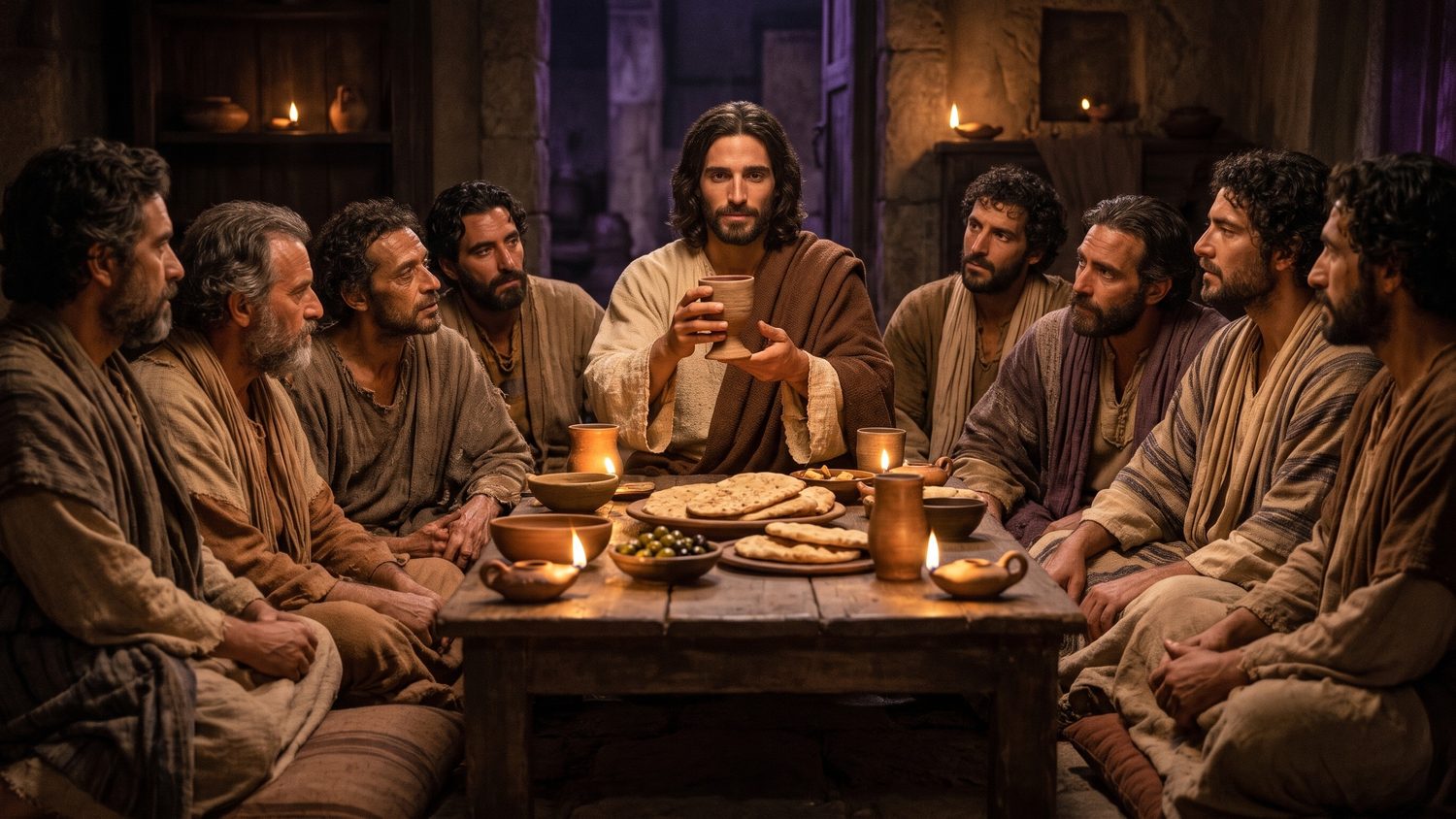
At the Last Supper, Jesus took the cup and said:
This cup is the new covenant in my blood, even that which is poured out for you.
Luke 22:20 (excerpt) · ASV
So with a new covenant, do we no longer need to obey? Jesus himself said:
Think not that I came to destroy the law or the prophets: I came not to destroy, but to fulfil.
Matthew 5:17 · ASV
Hebrews says Jesus is “the mediator of a better covenant, which hath been enacted upon better promises” (8:6, excerpt). Hebrews 8 explains what this new covenant is:
I will put my laws into their mind, And on their heart also will I write them: And I will be to them a God, And they shall be to me a people.
Hebrews 8:10 (excerpt) · ASV
| Aspect | The first covenant | The new covenant |
|---|---|---|
| The blood of the covenant | Moses sprinkled it on the peopleExodus 24:8 | Jesus’ blood, poured out for youLuke 22:20 |
| How it is kept | The people answered: we will do itExodus 24:7 | Laws put into their mind and written on their heartHebrews 8:10 |
| What happened to the covenant | Which my covenant they brakeJeremiah 31:32 | A better covenant, on better promisesHebrews 8:6 |
In other words, the new covenant does not take the commandments away; it puts God’s word into our hearts, so that we can truly keep it. Jesus said: “For my yoke is easy, and my burden is light” (Matthew 11:30); and 1 John says: “his commandments are not grievous” (5:3, excerpt). After believing, we are to obey, and the Bible says this can be done.
If we believe and are willing to walk, where does this road end? We continue in the next article, “Where is eternal life?”
Something to think about
- How do I see “works”: as an extra burden, or as part of faith?
- The people in the wilderness had faith and saw miracles, yet were overthrown in the wilderness. Is there anything I have heard but not yet done?
- If the new covenant writes God’s word on our hearts, am I willing to let these words truly come into me?